Beef prices go up March 2nd  — Lock in current pricing on Bulk Beef Shares + Bundles today!

No Corn, No Soy: What's the buzz?

written by

Joe Wanda

posted on

February 5, 2026

No Corn, No Soy: The Truth About Feed, Fats, and What Really Matters

As consumers become more educated about food quality, one topic has begun circulating online in the health space: corn and soy free fed livestock. New marketing labels like “no corn, no soy” are starting to show up — and while the intention behind them is often good, the conversation has become oversimplified from our point of view.

At Wanda Farms, we believe transparency matters more than trends. So yes, we do supplement corn and soy to our chickens and hogs. We aren’t trying to hide anything. However, this post explains why the no corn/soy label exists, what actually impacts nutrition, and how we are approaching feed decisions with research vs just trying to get the latest marketing claims.

Why the No Corn, No Soy Debate Exploded

The last couple years, there’s been a growing push for animal proteins produced without corn and soy in their diet. Beginning in 2025, I started to see some brands pop up and a handful of health influencers pushing this message. I’ve been slowly looking into this subject and considering our options, but slow to jump on and make sure to spend some time making an educated decision, before jumping onto the latest trend. 

However, last week, there was a recent backlash against the large billion dollar publicly traded company, Vital Eggs. Highlighting the growing consumer distrust of industrial agriculture and namely, exacerbated this growing concern of feeding corn and soy. (My thoughts are here: Is Vital Eggs full of Bull@#$%!). 

Consumers, as they should be, are mainly concerned about corn and soy because it’s the most common industrial monocrop here in the U.S. and is closely associated with: 

  • Heavy pesticide use
  • Genetically modified seeds
  • Highly processed animal feeds

For many shoppers, “no corn, no soy” feels like a shortcut to cleaner eggs or animal proteins in general.

But removing ingredients without understanding nutrition does not automatically create healthier eggs and meat.

Non-GMO Feed: The First Line in Meat and Egg Quality

One of the most common concerns surrounding corn and soy is genetic modification.

That concern is valid.

According to the USDA, over 90% of U.S. corn and soy acreage is genetically engineered, for herbicide tolerance. That’s why at Wanda Farms:

We only use non-GMO ingredients — always.

This distinction matters far more than simply removing corn or soy altogether. Non-GMO sourcing eliminates many of the chemical and environmental concerns consumers associate with these crops, while still allowing flexibility to formulate nutritionally complete rations. 

While I understand, some folks have autoimmune issues with corn and soy. I don’t think this is the majority of our population. More than likely it’s the GMOs/chemicals causing these health problems. 

Remember the Native indians introduced us to Maiz (corn) and soy was introduced to us from China hundreds of years ago. While they have been developed significantly over the last few hundred years, they are NOT inherently evil crops. These crops have been a part of civilization for thousands of years.

The Real Nutritional Issue: PUFA Content & Fat Balance

Much of the no corn/no soy movement stems from a legitimate health discussion around PUFAs (polyunsaturated fatty acids).

What Are PUFAs?

PUFAs include both:

  • Omega-6 fatty acids – Alpha-Linolenic acid (ALA) 
  • Omega-3 fatty acids –  Linoleic Acid (LA)

Both are essential fats that our body cannot produce, meaning the body needs them through diet — but the ratio matters.

The modern American diets tend to be heavily skewed toward omega-6s, often exceeding ratios of 15:1 or higher. Some research suggests upwards of 25:1 due to our highly processed food diets.  Researchers suggest a healthier balance is much closer to 1:1 to 4:1 as our ancestors most likely ate as hunter and gatherers. 

When omega-6 intake greatly outweighs omega-3, it can promote inflammatory pathways, oxidative stress, and poorer fat balance in the body.

Omega-6 Is Not the Enemy — Imbalance Is

There’s a growing misconception online that omega-6 fats are inherently harmful.

That is not supported by evidence.

Harvard Health Publishing explains that omega-6 fatty acids:

  • Are essential for normal growth and development
  • Can reduce LDL (“bad”) cholesterol
  • Are associated with lower cardiovascular risk when consumed in appropriate balance

The real concern is excessive omega-6 intake without sufficient omega-3s, not omega-6 itself.
Source: Harvard Health Publishing – No need to avoid healthy omega-6 fats
https://www.health.harvard.edu/newsletter_article/no-need-to-avoid-healthy-omega-6-fats

The goal is not to eliminate omega-6, but to restore a healthier omega-3 to omega-6 ratio.

This means there’s 2 sides of the equation to balance this as a consumer. Decrease omega 6 fats or increase omega 3’s in one’s diet to get it a closer to the preferred ration of 1:1-1:4 

I believe this is one reason fish have been so commonly suggested to be in consumers' diets 1-2x per week.

Analyze your diet based the ratios for most common foods consumed here: https://blog.algaecal.com/omega3-omega6-chart/

Why Pasture-Raised Eggs and Meat: Produce Healthy Fat Profiles

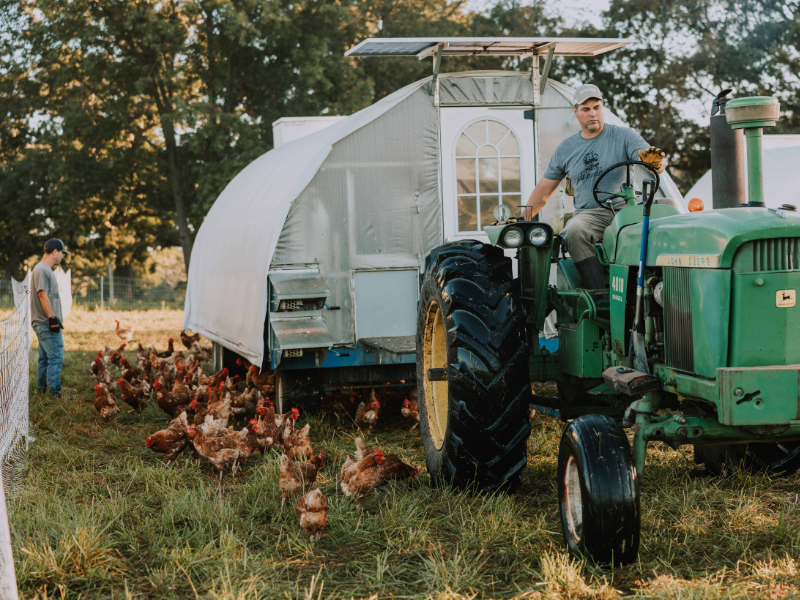
At Wanda Farms, our chickens are pasture-raised, meaning the supplement grain is only one part of their diet. On pasture, chickens naturally consume:

  • Grasses and forages
  • Clover and legumes
  • Insects and larvae
  • Seeds and plant matter
  • Soil-based minerals

Peer-reviewed research shows that pasture access significantly increases omega-3 content in eggs and meat, regardless of whether corn or soy is included in the ration.

Research online consistently shows pasture raised has a healthier omega-3 to omega-6 balance than conventional eggs and meat. Research from Penn State found pastured eggs contain over twice the omega-3 fats and less than half the omega-6:omega-3 ratio of conventional eggs. Here’s the ranges you could expect based on research: 

  • Eggs (pastured) ~ range 1:3 to 1:8 ratio
  • Eggs (conventional) ~ range 1:19 to 1:25 ratio
  • Chicken (pastured): ~ 1:3 to 1:8 ratio
  • Chicken (conventional) ~ 1:30 ratio
  • Pork (Pastured) ~ 1:5
  • Pork (Conventional) ~ 1:14 ratio
  • Beef (grass-fed only) ~ 1:1 to 1:2
  • Beef (grain fed) ~ 1:8

While these ratios are not perfect 1:1 with the exception of grass-fed beef. I think it tells the story of how a diverse diet on pasture makes a huge difference nutritionally. 

Bottom line:
👉 Pasture access has a huge impact on nutrition than solely individual grains.

The Hidden Problem: “No Corn, No Soy” ≠ Low PUFA Eggs

Here’s something rarely discussed:

Some no-corn, no-soy feeds can still rely on high-PUFA grains.

Alternative grains such as:

  • Wheat
  • Oats
  • Barley
  • Rice bran
  • Sunflower meal

…can still be high in omega-6 fatty acids. For example, a sunflower meal is 4x higher than corn! 

So while the label changes, the fatty acid profile of the product may not improve.

This is why simply eliminating corn and soy does not solve the core nutritional issue.

The focus must be:

  • Overall fat composition
  • Omega-3 inclusion
  • Pasture access
  • Total dietary balance

So while there’s research out there sharing that the omega fat ratios are closer to 1:1 with a no corn/no soy diet. It’s not a sure thing just by eliminating these 2 grains. 

Where Wanda Farms Is Heading: Improving Omega Balance 

We understand why customers are asking these deeper questions — and we’ve been asking them too.

We have been actively researching feed strategies that further improve omega balance. However we’ve seen a few issues that have prevented us from moving forward: 

  1. No corn/soy rations that do not solve the Omega 3:6 ratio problem by still containing high amounts of Omega 6 feed ingredients. 
    1. The big one is Sunflower meal (4-5x higher in Omega 6 than corn)
  2. Rations that we’ve seen other local farmers experiment with have seen health problems from their chickens due to malnutrition leading to significant deaths and slow growth rates/little egg production. We are NOT going to compromise on animal welfare for nutrition perfection. Let alone take financial risks as a farm business trying to seek perfection. 
  3. Sourcing issues. To this day, the only creditable feed mill with this type of ration I have been able to find is located in Texas. The feed is priced 3x our cost plus trucking to our farm. Which from my calculations would result in our poultry products needing to be doubled in price  – for me I can say the juice is worth the squeeze for a little more nutritional difference at this point. 
  4. As mentioned above, we want to ensure we are sourcing grains locally because locally sourced is one of our core values. Unfortunately, corn and soy are the most common grains grown here in the midwest. I have reached out to a handful of other farms that advertise no corn/soy feed, but when asked where they source this, the answers are it's proprietary info or no response. 

Here's the progress we have made by actively talking to our local organic feed mill about improving our existing ration. 

Omega-3–Rich Rations

  • Incorporating more omega-3 feed sources like “Flax seed”
  • Finding alternatives grains that are accessible locally with lower ratios
  • Feeding higher amounts of Fish Meal – this can affect meat and egg flavor to taste fishy! 

Research published in The Journal of Nutrition shows that flax supplementation:

  • Increases omega-3 levels in eggs
  • Improves omega-3 to omega-6 ratios
  • Supports overall egg nutrient density

Source: The Journal of Nutrition – Flaxseed supplementation in laying hens
https://academic.oup.com/jn

Our long-term goal is to move closer to a 1:1 omega-3 to omega-6 ratio, without compromising:

  • Chicken health
  • Significantly reducing livestock performance
  • Nutritional completeness
  • Significant increased costs – affecting consumer access 

If we can find a feed ration that makes sense, we plan to experiment with this on a smaller trial basis. However, I would like to do performance evaluation and nutritional studies to make sure these decisions are made with real data, not just to capture a market share based on a ration ingredient claim. 

Your Farmer’s Final Thoughts: Regenerative farming

I believe this issue of nutritional imbalance shows the deep issues of our current industrial food system. It’s not that Industrial farmers are intentionally trying to feed us corn and soy. 

We’ve prioritized corn and soy development over the years with major food corporations and big ag groups lobbying to keep it front and center as agriculture’s main crops of production. What I mean by that is, the government continues to subsidize these products leading to corn and soy being low risk for farmers to grow, and therefore what’s readily available as feed for livestock farmers and consumer products.  

I do think over time as consumers are more vocal about these issues and demand shifts for better quality food. Policy will change to incentivize other grains and products for production. I’ve said it many times, but my personal vision would be that 50% of the midwest be converted back to prairie land producing ruminant livestock again, not row crops! 

I know beef gets a bad wrap in the media, but grass fed beef is by far the healthiest food for us as a consumer. If we want to get back to ancestral eating. Grassfed ruminant animals were our primary meats for consumption, not poultry and pork. Not that we didn’t eat poultry and pork, and that they were inherently bad, but it was just not something that could be mass produced like it is today now that grains have been industrialized. At the end of the day, I can’t see how we as a nation go back to our ancestral way of eating as hunter/gatherers at this point, but hopefully we seek balance through intentional eating. Which is exactly what we preach and share with our farm’s mission to nourish our local community. 

If you have not read Omivores dilemma by Michael Pollen. Please read this book. I think it’s the right perspective on understanding there’s such a thing as finding a balance in our food system to continue feeding our growing population, but with higher quality standards.

I personally do not want to chase marketing labels just to get the latest market share, but believe in thought out research-driven decisions and continuous improvement.

That’s the standard we will hold ourselves to at Wanda Farms.

More from the blog

A warning to all fatty meat lovers

A buttery ribeye infused with rosemary.  Or Sunday-morning bacon, maple-kissed and golden-edged. And not without plenty of butter and eggs on the side. All of these are indulgences I love… and that I’m sure you love as well. Even more so because these foods are good for you… Giving your body so much strength and vitality. But you know what… plot twist. All of those people who say fatty steaks and eggs are the villain, and will cause such and such diseases, may actually be RIGHT.  Fat is the worst thing you can eat if you’re trying to be healthy—under ONE condition… But before I get into that… Why is it that so many people made the decision to incorporate nutrient-dense meats and eggs (including lots of fat) in their diet? Why Fat Is Essential for Health. Fat is the body's preferred source of fuel (especially when on a low-carb diet). Your body uses it much more efficiently than both carbs and sugar… (no energy crashes or mood swings.) Some vitamins NEED fat for your body to absorb them… like vitamins A, D, E, and K, which are fat-soluble, meaning you literally can’t absorb them without fat present… So even if you’re eating liver (vitamin A) or greens (vitamin K), those nutrients are pretty much USELESS without enough fat to carry them into your cells. The cholesterol in fat is the raw material that produces hormones like testosterone, estrogen, and cortisol (responsible for maintaining constant blood pressure and blood glucose levels, and regulating immune function and anti-inflammatory mechanisms) in your body. Low fat = a starving endocrine system… which tanks your mood, libido, and metabolism over time. Every cell in your body has a fatty membrane… and your brain? It’s made up of roughly 60% fat (mostly DHA and other fatty acids). This means not eating fat is basically starving your cells and brain—your operating system. All unnecessary cravings go away because of the way fat satiates your body (it slows digestion, stabilizes blood sugar, and keeps you full)... without it people tend to snack throughout the day, crave and binge carbs, and lose control of knowing when their body is actually hungry.  Fat is the key that allows your body to thrive and prosper. (Even if you love to eat veggies!! Because many of the important nutrients in veggies are fat-soluble… meaning your body can’t absorb them without fat present.) So what makes fat so bad? Well firstly, not ALL fat is the same. Some fat may be detrimental to your health. While other fat can heal your body in the most marvelous ways. This is because of one important thing: Toxins are stored in the fat. In fact, some toxins love fat… due to being lipophilic. (Meaning they dissolve in fat.) Although some toxins—like bentazone, glyphosate, imidacloprid, fluoride, and arsenic—are hydrophilic, meaning they dissolve in water (and don’t store in the fat). So just like any packaged snack at the grocery store, low-quality fat may have hidden mystery ingredients… i.e. toxins, inside it. (Remember: not ALL toxins are stored in the fat… but most of the persistent and harmful ones are—especially the ones conventionally-raised livestock are exposed to.) Because, whenever an animal is exposed to harmful substances/toxins… like pesticides, herbicides, heavy metals, antibiotics, or mold toxins—whether that’s through the food they eat, or the water they drink, or the air they breathe… Those compounds don’t just vanish into thin air. (Or don’t just turn into a cow-patty lol.) They have to go somewhere. That “somewhere” being the fat of the animal.  But really, it’s all by design. Because shoving all those toxins into fat cells keeps them away from vital organs—it’s the body’s version of sweeping junk under the rug. But with one problem: those toxins stay there. So which toxins accumulate in fat (and how’d they get there)? Dioxins and furans (PCDDs/PCDFs) — These are toxic compounds created when industrial waste, plastics, or chemicals are burned… think incinerators, factory emissions, or even backyard trash fires. They don’t break down easily and are known to bioaccumulate in fat—making them one of the most persistent and dangerous pollutants in the food chain. So how do they end up being consumed by livestock? These toxins settle onto grass, soil, and water—which grazing animals like cows eat directly or ingest through contaminated feed (like grain) or hay. Pesticides and herbicides — Banned chemicals like DDT can still be found in soil today (both the soil which livestock may live on and the soil their feed—mainly grains for most—is grown on)… in addition to other modern pesticides—like organophosphates and organochlorines. If an animal was fed feed grown with pesticides, its residues can end up in its fat… and then on your plate, and then in your body. PCBs (Polychlorinated Biphenyls) — These man-made chemicals were once used in everything from paints and coolants to glues and electrical equipment. Even though PCBs were banned in 1979, they’re still found in soil, water, and—yep—animal fat. Their ability to stick around for decades means they often show up in conventionally-raised meat, through feed, water, or soil contamination—when ingested, they circulate in the animal’s bloodstream and get stored preferentially in adipose (fat) tissue, especially in fattier animals like pigs. Toxic heavy metals — Some metals like mercury, lead, cadmium, and even aluminum accumulate in fat… and these aren’t just neurotoxic—they disrupt hormones, impair detox pathways, and increase oxidative stress. Chronic exposure (even in small amounts) accumulates over time. Animals ingest them via contaminated soil, water, or feed, especially if raised near urban or industrial zones (for example, lead and cadmium can enter through plants or grains grown in polluted soils). These are the most prominent toxins that end up being in the fat of most conventionally raised animals. And the reason why SOME fat causes many health issues. By “SOME fat” I mean fat from conventionally raised animals (including cattle, pigs, chickens…) which are exposed to these toxins persistently… and NOT fat from animals raised with good practices. (And these toxins don’t ONLY end up in the fat of the meat you consume… they end up in the dairy—like milk, cream, and butter—and egg yolks produced by these animals too… which are made up of fat.) So although short-term you might see results sticking to conventionally raised, grain fed meats and eggs (with toxins accumulated in the fat)—simply because some of the benefits of those meats and eggs are still present… Long-term it is not the solution to feel your very best and be TRULY healthy. Because slowly but surely, those same toxins will accumulate in your body (and in your fat). The Problem with Toxins in Fat. If someone is relatively new to a fat based diet, with lots of meat and eggs, then they may in fact feel good, and think nothing is wrong… but that’s only because the amount of toxins is so small. As time passes, these toxins will slowly accumulate until they cause your body serious harm, which may include: Fatigue, headaches, brain fog, anxiety and depression… Digestive problems, leaky gut, histamine responses, bloating and inflammation… Increased risk of cancer, cardiovascular disease, liver damage, obesity… Hormone imbalance, mast cell overreaction, trouble sleeping, skin conditions… Or more.  Simply because these toxins DO NOT belong in your body. (And the animals' bodies, and anywhere to be honest…) This is exactly why WHERE and HOW your food was raised is so important, and why I as a farmer stress food quality so much… Because when you buy food from a farm that PROPERLY raises its animals and takes good care of its land… It makes the difference between you being actually healthy and feeling like your true, abundant self… instead of having loads of unwelcome and unnecessary health issues. This is exactly why Wanda Farms has extensively audited our practices to make sure there is no toxin build-up in the fat of our animals. To ensure you’re eating quality fat, from the best possible source, with NO toxins. That is TRULY the best for your body and soul, and your family’s. How this is possible. (And how regenerative farming solves this problem.) Our regenerative farm is 60+ miles away from any major cities—out in nature, away from toxin-exposure, where the land is pristine and untouched (sounds like a fairy-tale right? lol). One reason why we practice regenerative farming—which includes NEVER ever spraying any glyphosate, pesticides, or herbicides on our soil—is because that preserves the quality of our soil, thus allowing our soil to have a high microbe count. And guess what? The microbes in quality soil actually break down any toxins that may be present in the soil. And our animals only eat the best quality food, and are given NO hormones, NO steroids and especially NO mRNA vaccines… And NONE of our products have junk like nitrates/nitrites, GMOs, additives, fillers, MSG, etc. Our cattle graze our lush pastures, and eat only grass year-round, even in the winter (we make our own hay from our grass to feed in the winter.) Our omnivorous chickens and hens love to “hunt” for beetles, grasshoppers, ants, spiders, worms; and snack on clover, alfalfa, dandelion, and wild plants. Our hogs root around with their snouts for wild plants and grubs like roots, tubers, and bulb; and snack on grasses, clover, herbs, weeds, and the occasional acorns falling from the trees high above. Anything they can find. Why do we do this? Because we want you to feel, be, and look your best, and be the healthiest you possibly can be in a world where it’s hard to find REAL food.

How A Broken Freezer Saved My Life

Hello farm family! Hannah here.  In case you didn’t know. The month of May highlights Mental Health Awareness nationally.  As we have gone through our journey on this farm eating better quality food, we have found food to be medicine to not only improve many of our customer’s physical health and ailments, but also mental.  And today to kick off the month of May, I want to share a personal story about how our food directly impacted Wanda Farms’ very 1st customer.  Sick, Stuck, and Starving for Worth It was February, 2017. Depressed, drained, defeated I just desperately wanted to disappear.  There was no anticipated future in my life.  Friends would often ask, “Hey, what is your goal or 5 year vision?” 5 year vision???  Heck I couldn’t see my life beyond 1 year.  And the goal?  It was just to make it through today.  Sadly, this above was my daily life’s reality.  Since I was a teenager, I struggled with depression, anxiety, and worse of all an eating disorder that led me down many dark paths. I was in and out of therapy and treatments. Better, bad, and worse seasons all rollercoasting throughout my teenage years and into my twenties.  I believed that skinny was beautiful. Women needed to be thin to be admired and loved.  So to achieve this, I created rules for myself: Rule #1: Fat is bad: too many calories. So I leaned towards fish and chicken. I noticed however these meats at the grocery store were sold infused with some kind of sodium to preserve it.  Rule #2: Salt is bad. And what kind of sodium is this anyway? Is it safe? So I grew skeptical and hesitant of meat sold at the store and limited how much I could eat.  At that time I heavily got my calories from fruit, vegetables and chocolate. The deficient calorie intake along with excessive exercise led to a horrible health condition known as anorexia nervosa.  2015 to 2018 was one of the darkest seasons of my life. I used anorexia to handle my stress and give me a sense of control. My everyday thoughts were about disappearing and numbing out. All this said, I was very sick and stuck. Beef, Belief, and a Broken Freezer In 2018, after being married to Joe for 4 years, he was excited to begin our farming journey on our own farm. He had just finished raising our 1st group of 4 grass-fed only beef. He mainly did it for his mom, sister and my mom. All who were disgusted with commercial organic beef. They wanted the healthiest beef, no industrial corn raised beef.  We purchased a couple old freezers off facebook marketplace and set them up in our dungy old basement.  After filling up our families' freezers, and a few new customer orders, we put the remaining beef in our freezer.  However, 1 month later….. Bad news. The upright freezer’s door wasn’t shutting properly and all the beef stew on the freezer door was completely thawed and leaking out of the paper packaging. So of course I knew I had to do something with it. I mean we just dumped our life savings into raising this beef, butcher fees, and freezers.  It couldn't go to waste.  So that weekend, I cooked up 25 lbs of beef stew to refreeze for later meals. I quickly learned all the things you can make with beef stew meat in the slow cooker.  So I got busy in the kitchen making BBQ beef, beef tacos, enchilada, Italian beef, and of course beef stew. At this time, I was still struggling and somewhat skeptical about the thought of eating beef. My thoughts would distract me; it was only safe to eat small amounts of lean cuts. However, having joined Joe in raising our beef and seeing 1st hand how it was raised and where it came from. I slowly became more confident and open to trying it.  As I battled my thoughts I would remind myself.  “I can trust this. This beef was raised in our backyard under our control.” I started to eat the beef at first with hesitancy, but each time, I felt that I had more and more confidence. Finding new hope Shortly after this, we also raised our 1st batch of meat chickens. Now, the grocery store chicken always left me skeptical and hesitant in buying because I heard all the stories how they infused it with sodium to preserve it.  But…. Our chicken was different.    I saw how this chicken was raised and naturally processed. It was just chicken. All making me feel comfortable to eat chicken again.  Having worked alongside Joe in raising our meat I felt a sense of confidence and control knowing where our meat came from and I started to incorporate meat back into my diet regularly.  2019 was the healthiest year of my life in over 6 years.  This transformation didn’t happen overnight….but My depression, mental health, and eating disorder were improving.  Then the best thing that ever happened to me. My DREAMS came true. Yes, I started dreaming again and having HOPE!!! December 2019, I WAS PREGNANT!!! It was by far the most exciting time of my life. The feelings of guilt for not being able to bear a child were over.  I felt the best I’ve ever felt in over 15 years that Christmas.  Meat transformed my life and presented healing We never thought anything of that broken freezer. We wondered for years how my healing came about. All the in-patient treatments, counseling, and therapy during a decade and a half of struggling never really moved the needle on my mental health illness.  However in 2021, Joe and I started to hear stories of folks on the carnivore diet.  After listening to their stories, which to our surprise, many had a similar journey of depression, anxiety, and eating disorder on a vegetarian diet, we heard how they also finally found healing with meat as their primary source of food.  I didn’t follow an all meat diet. However we saw that all the non saleable beef stew that we had to eat and the farm fresh chicken were all at the same time I experienced a turn in the road.  Maybe it’s just a coincidence, but maybe that broken freezer saved my life! While I’m not here to say meat only created the healing. Meat was the missing piece in my diet. My brain needed those essential nutrients to improve my cognitive and mental health.  Today, meat is an essential part of my daily diet. While Joe and I don’t live on a carnivore only diet. We no doubt make it our staple product in our household for every meal because we see the benefits it brings to our health both physically and mentally.  If you personally or have a loved one that is struggling with mental health, my deepest sympathy goes out to you.  It’s such a difficult battle.  It takes trusting in God, countless prayers, and a commitment to fight! Thanks for reading. Your farmer,  Hannah Wanda P.S.  We want this farm to be more than just a place you buy food from, but a community where we can encourage each other for a brighter future! If you have a health transformation story (either mental, weight loss, skin, gut condition, cancer, etc) that you would be willing to share to our community. Please reach out to me at Hannah@wandafarms.com. We would love to highlight your story to our community.